

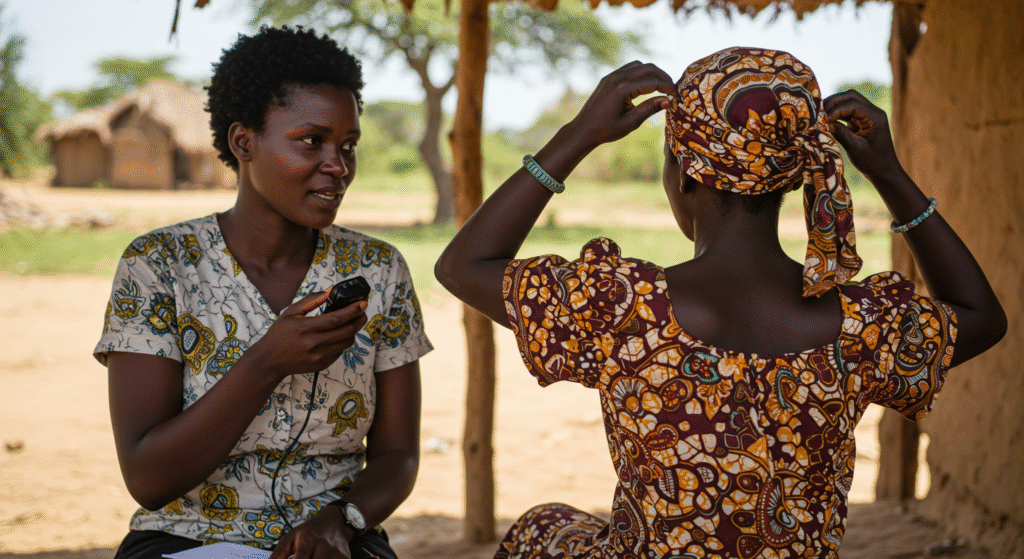
For most researchers, every new project feels like an exciting adventure of discovery. It comes with moments of fuzziness, clarity, and challenges that push us to reflect and refine our methods. During one such project, we engaged with several female participants through interviews, focus groups, and co-creation activities.
The women shared rich, vivid experiences some so striking that we could recall them days after fieldwork. But as our team conducted more interviews across different locations and phases, we began to notice a familiar challenge: the stories started to blend into one another.
After much reflection, I realized that documenting each participant’s story holistically could have preserved these details, even as the number of participants grew. This reflection led to the creation of the story mapping framework in research, a simple but powerful way to capture human experiences with clarity and depth.
Why Researchers Need a Story Mapping Framework
Inspiration was drawn from empathy mapping, journey mapping, and storytelling, which are three powerful methods long used in design and research to capture human emotions, needs, and desires. The Story Mapping Framework builds on these to ensure participants’ stories remain authentic, accessible, and insightful long after the research ends.
In order to capture the stories and emotional subtleties behind participants’ decisions, we needed a tool that would reveal qualitative depth. One that could follow a participant’s journey to capture not only what participants do or experience, but also the why behind their decisions.
The goal was to merge these three methodologies into one. Each participant having a personal story capturing the emotions, thoughts, actions, and external influences that drive him or her and not just a mere summary of behaviors.
How the framework works
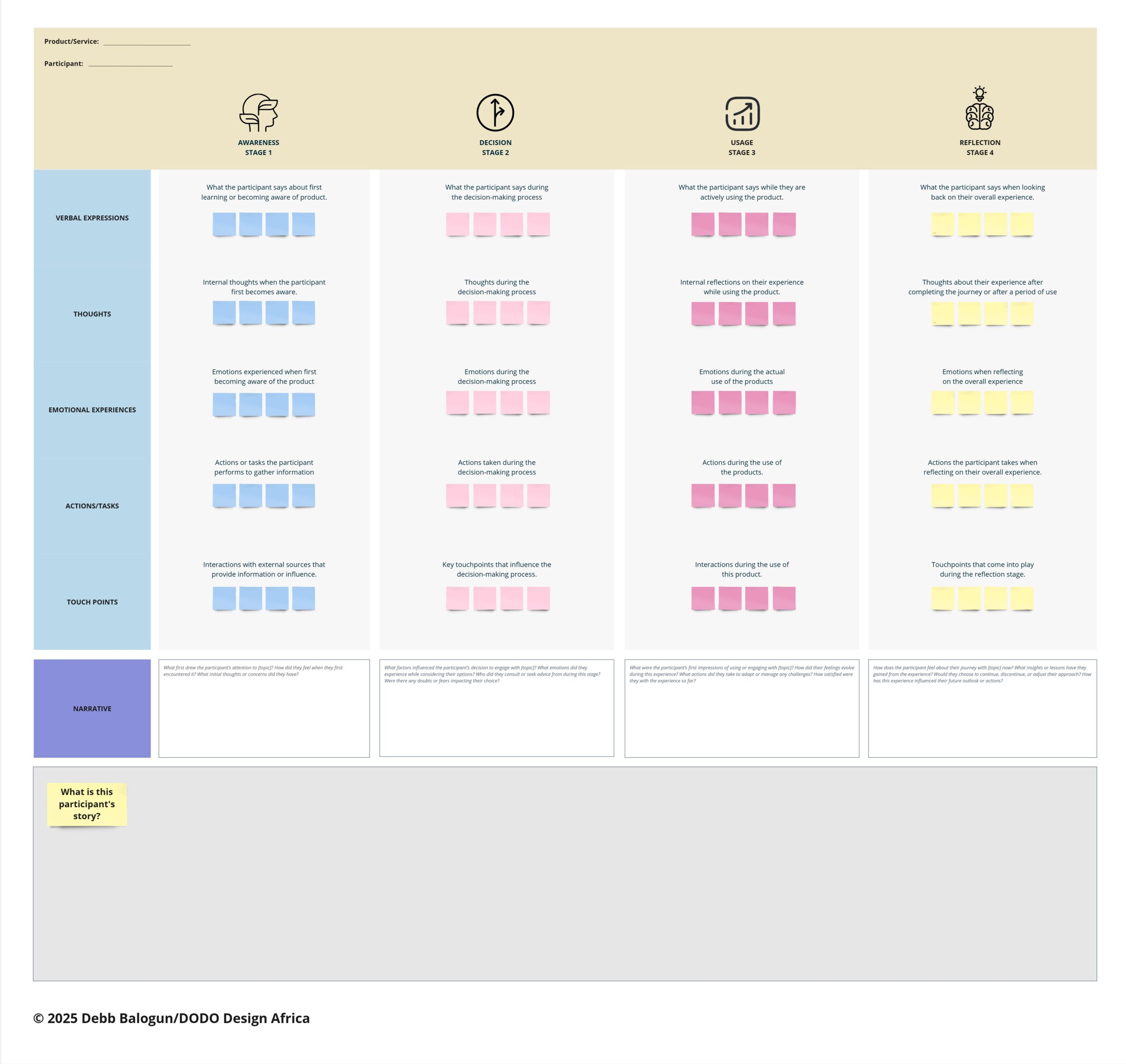
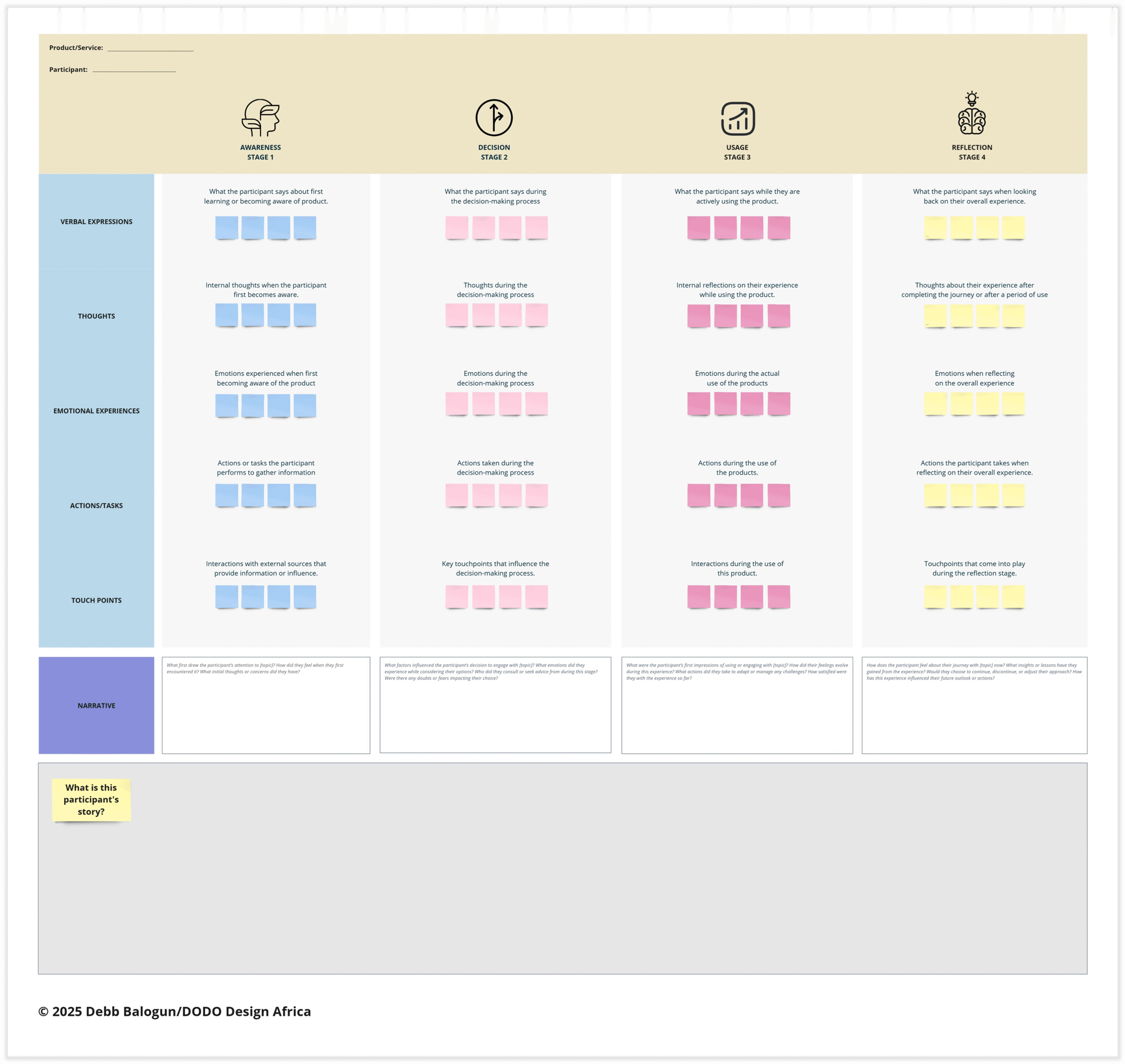
The framework captures four key stages in a user’s journey.
- The awareness stage tracks how participants first learn about a product or service.
- The decision-making stage seeks to understand their thought processes as they weigh options and decide whether to proceed with the product or service.
- The usage stage focuses on the experiences the participants have when they interact with the products and services.
- The reflection stage captures participants’ overall experiences. Each stage has five critical components: verbal expressions, thoughts, emotional experiences, actions/tasks, and touchpoints. These components work together to paint a clear picture of the participant’s journey.
An interesting part of this framework is the narration section at each stage. By combining all the data collected, what participants say (verbal expressions), think (thoughts/internal reflections), feel (emotional experiences), do (actions/tasks), and the touchpoints they interact with, researchers can construct a comprehensive story. This weaving together lays a great foundation for the insights to be birthed and to be shared.
Why the Story Mapping Framework is Useful in Research
- This framework can be adapted to a wide variety of research fields. Whether you’re studying healthcare journeys, consumer behaviors, or user experiences, it provides a holistic view of the participant’s lived experience, helping you to look at what they do and why they do it.
- A major feature of this framework is that it shows the external influences of a user, the touchpoints. They play a critical role in shaping participants’ behaviors and decisions. For example, within a journey, a participant might interact with a healthcare provider, a support group, or a Facebook group. Understanding these interactions can help researchers identify barriers or facilitators in the participant’s journey.
- Researchers can also identify emotional patterns that guide behavior. By mapping emotions to actions and decisions, the framework provides insight into how feelings like anxiety or relief shape the overall experience. This is critical for designing solutions and improving services.
- The narrative-building aspect of the framework makes it easier to communicate findings. Research isn’t just about numbers or isolated quotes, it’s about understanding the human experience. With this feature, a researcher can start crafting compelling stories, making it easier for stakeholders to understand the findings that researchers have uncovered.
- The narrative-building aspect of the framework makes it easier to communicate findings. Research isn’t just about numbers or isolated quotes—it’s about understanding the human experience. With this feature, a researcher can start crafting compelling stories, making it easier for stakeholders to understand the findings that researchers have uncovered.