
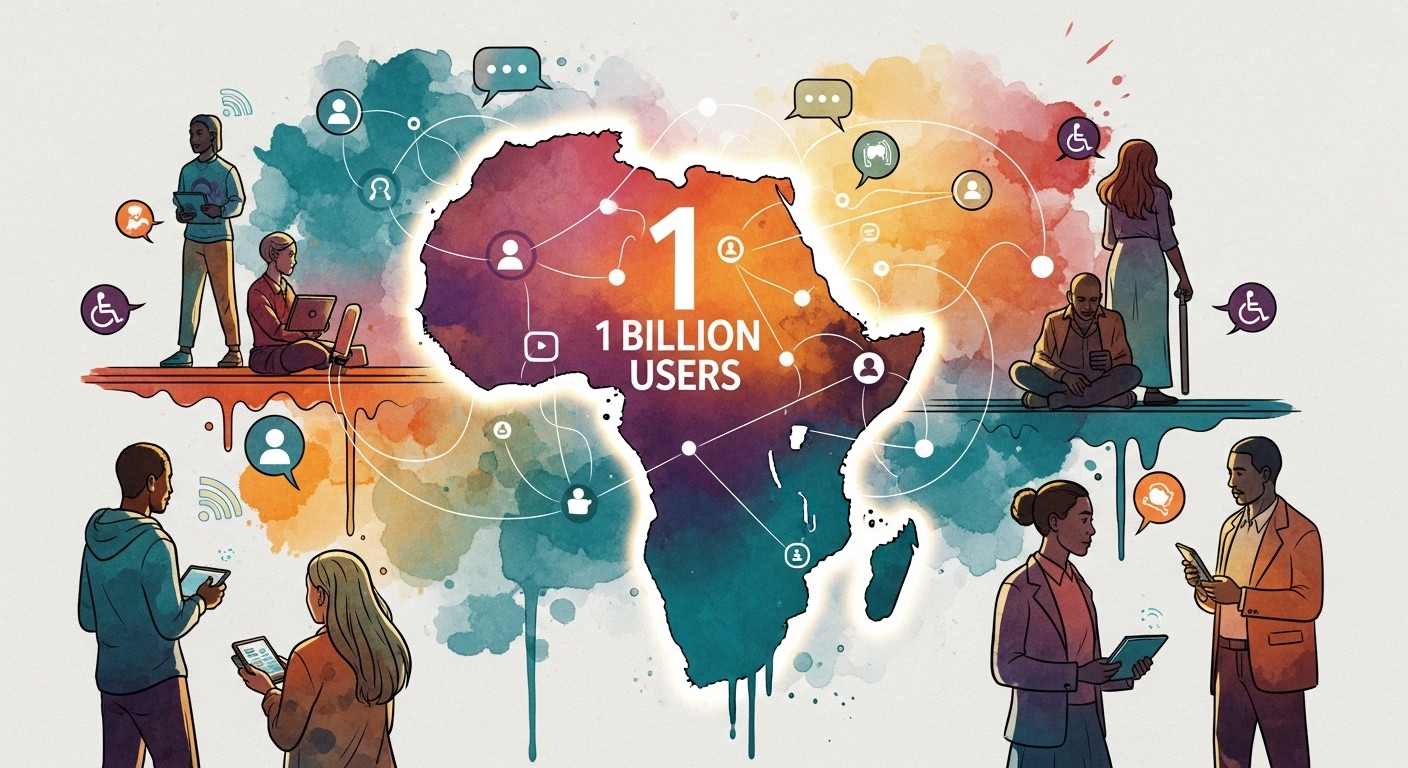
Inclusivity is a topic that has been very little emphasized in the Nigerian and African landscape, especially in comparison to global markets. Yet, when one looks into the idea of inclusive design, which speaks to valuing and including as many people as possible, building products, services, environments, or experiences that are accessible, usable, and meaningful—Africa has not prioritized it as it should. Probably because business leaders and decision makers often deem it unprofitable.
Africa has one of the world’s most diverse populations at 1.5 billion as of 2024, adding over 30 million people every year (World Bank). Over 2,000 languages are spoken across the continent, with more than 3,000 ethnic groups (Ethnologue). Nigeria alone has 500 languages and over 250 ethnic groups.
Globally, this makes Africa the most diverse continent, yet its inclusive solutions are often under-recognized and under-invested in. Often, inclusive design in Africa is born out of necessity, focusing on survival, economic access, and low-cost scalability. But in cases like M-Pesa, when done right, Africa has set global benchmarks for inclusive design that many Western markets later learned from. The results and impact of M-Pesa should guide and inspire leaders about the possibilities of inclusive design.
Understanding Africa’s Diversity
Africa isn’t just rich in diversity, the factors that drive it, religion, cultural practices, and social norms, shape how people trust, purchase, and interact with healthcare, financial services, education, governments, and more. Hence, when designing for such a market, inclusivity should be seen and utilized as a strategic advantage.
Inclusive design is not just a moral or ethical nice to have, this is a proven mode of profitably for any company that aims to provide solutions for a billion users. Hence, building with human differences in mind aids not just successful use of a product, but also profitability, it is key for increasing one’s user base as well as creating experiences that keep them coming back.
Inclusive Design vs. Accessibility
While accessibility focuses on disability, such as screen reader support for visually impaired users, subtitles or transcripts for those who are deaf or hard of hearing, inclusive design looks at socio-cultural differences, contextual nuances, languages, and age variations.
In Africa, inclusive design considers not just disability but the full range of human diversity:
- Language and literacy, including local languages
- Users who rely on voice communication
- People who cannot read or prefer oral interaction
Technology, Culture, and Economy
Technology access is not uniform:
- Not all users have smartphones
- Many rely on feature phones, USSD, or shared devices
- Internet connectivity ranges from sporadic to offline
Cultural and social norms influence behavior:
- Financial decisions and health behaviors may follow community norms or gender roles
- Certain practices may be taboo or shape trust
Economic factors also play a role:
- Inconsistent power supply can affect adoption
- Users may have irregular income or limited disposable data
Age diversity matters too: products must serve young adults and elders with equal clarity, as older users may behave differently when interacting with technology.
These differences are not exceptions, they are the norm in Africa. To cater to a billion users, the design process must begin with inclusivity in mind.
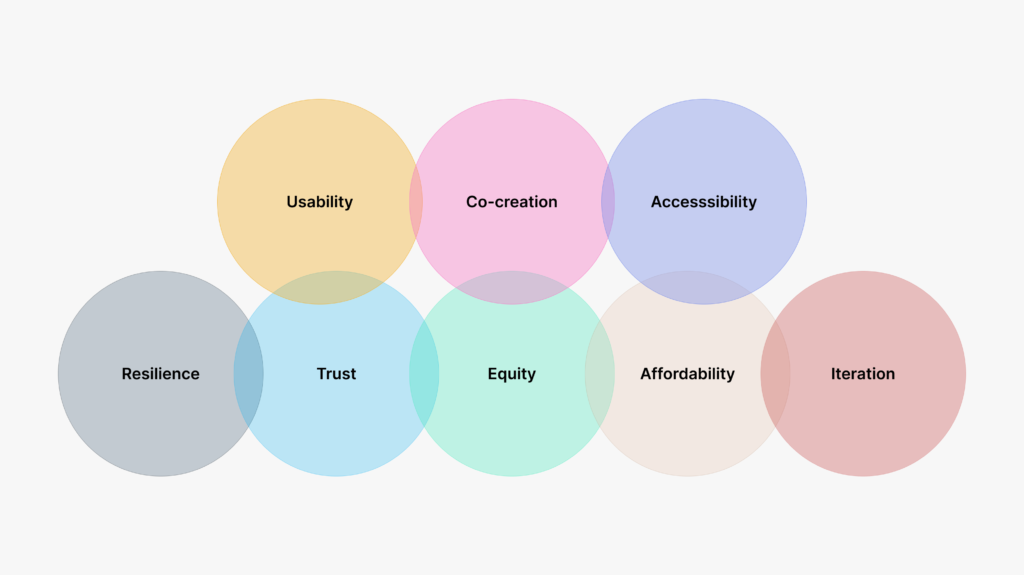
Key Ingredients for Inclusive Design in Africa
Globally, inclusive design is often framed around three ingredients:
- Accessibility
- Usability
- Co-creation
Based on our work with local communities, we believe these additional factors are essential to inclusive design in Africa: - Affordability: Solutions must be cost-conscious for users with limited income
- Trust: Transparency and reliability are crucial
- Resilience: Products must function despite unreliable infrastructure
- Equity: Respect for languages, literacy, and cultural context
- Iteration: Continuous learning from users ensures relevance
Together, these elements form a framework that guides teams in creating inclusive solutions for a billion users in Africa.
Africa’s diversity is an opportunity. Inclusive design allows businesses to reach more people, improve user experiences, and grow profitably. By building products with accessibility, cultural nuance, affordability, and trust in mind, companies can unlock the continent’s full potential, serve a billion users effectively, and be profitable.