

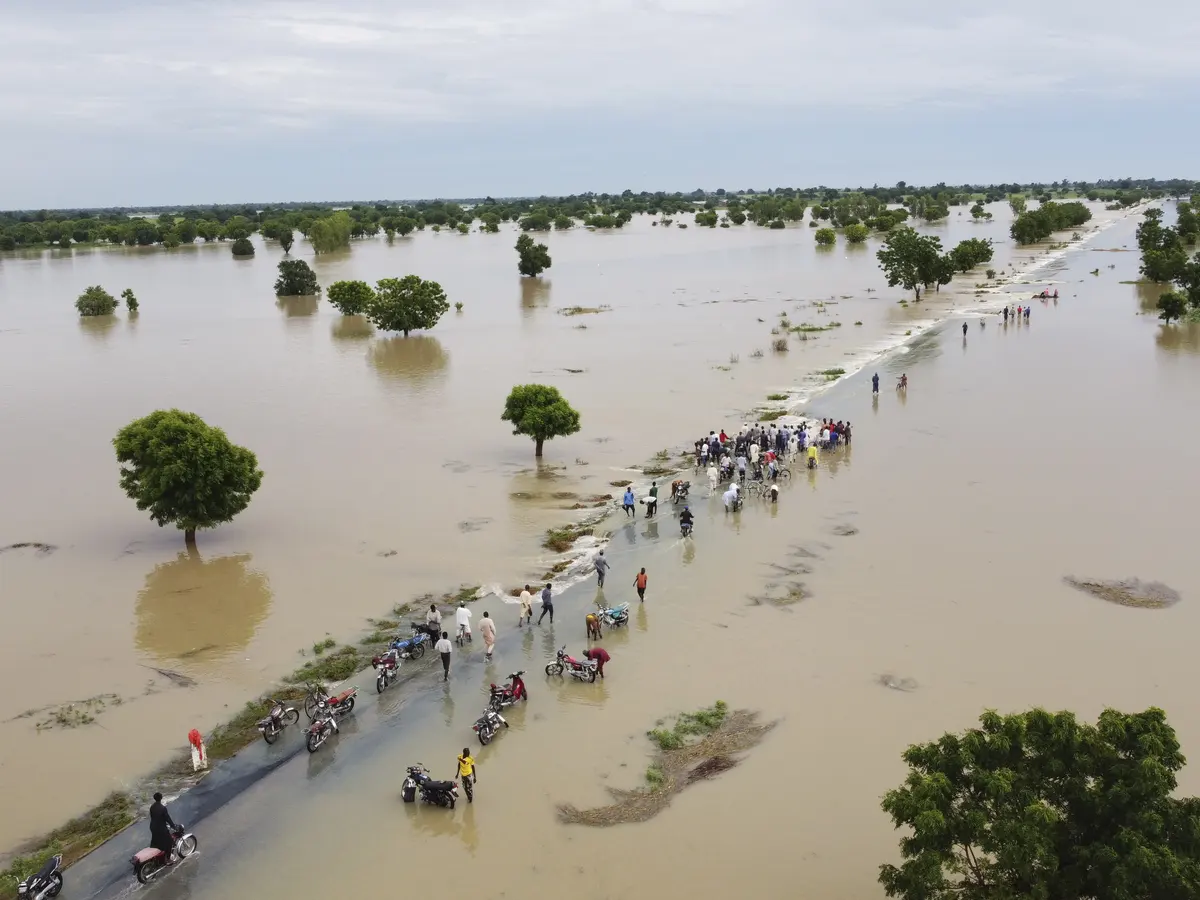
In 2022, researchers studied how climate-smart farming practices scaled across Kenya, Malawi, and Nigeria. Although the programs had equal funding and clear communication, results varied sharply between countries. While Kenyan farmers embraced agroforestry and soil practices, adoption struggled to gain traction in Nigeria, where labor demands and trust gaps slowed uptake.
This shows that climate programs often fail not because the solutions are weak, but because human behavior and local context determine success. As experts now highlight, behavioral research in climate programs helps uncover why these differences exist, showing that success often depends more on people’s behavior than on the technology itself.
The Kenyan–Nigerian contrast illustrates a broader pattern facing climate practitioners worldwide.
Why Behavioral Research Matters for Climate Programs
Climate change is a global challenge that needs coordinated action across different cultures. Yet, turning awareness into real action remains difficult. Many well-funded and well-meaning climate programs struggle when scaled across different countries, despite having adequate resources and clear messaging.
Numerous surveys done around the world show that a large share of people now recognize climate change as a serious threat. For instance, UNDP’s People’s Climate Vote 2024 found that 80% of people in 77 countries want stronger government action against climate change. Yet despite this awareness, other polls, such as those from Ipsos find that many report little change in their own behaviour, suggesting that translating concern into consistent action remains a major challenge. So what’s driving this persistent gap between knowledge and action?
This gap between climate knowledge and actionable behavior points to something overlooked: programs need to be deeply rooted in the psychological and cultural factors that actually drive human decision-making.
The Psychology of Climate Inaction
Human psychology often blocks climate action. People naturally focus on immediate rewards instead of long-term consequences. This makes climate change feel distant and less urgent compared to pressing daily concerns like employment or family needs. This temporal discounting effect are more prevalent, when climate impacts seem abstract or far-off. Social norms further compound these individual biases as people tend to look to others for behavioral cues. When sustainable actions aren’t visibly practiced or rewarded within their community, adoption rates remain low regardless of individual knowledge or concern. Culture adds another layer of complexity. Even communities facing the same climate risks may respond differently depending on how they interpret threats, trust institutions, or value collective vs individual action. Understanding these psychological barriers reveals that successful programs leverage human behaviours. This insight has led researchers to identify three key principles that consistently drive climate action across multiple countries and different cultural contexts.
Three Behavioral Principles for Effective Programs
1. Leverage trusted networks
The most powerful motivator isn’t fear or facts but evidence that “people like us” are taking action. Multiple evaluations across West Africa show that flood preparedness improves when messages connect to locally held values and when they are delivered through trusted community leaders rather than external agencies. The messenger matters as much as the message. Drought adaptation programs in Kenya were recorded successful when implemented through existing women’s savings groups. while many government-led programs have struggled.
2. Align with communal value system
Universal messaging often backfires by failing to connect with specific cultural priorities. A transportation program in the Philippines achieved widespread adoption by emphasizing how reduced air pollution improves children’s school performance, directly connecting to deeply held cultural values about education and family advancement.
Similarly, the cookstove programs in Guatemala only succeeded after researchers discovered that mothers-in-law heavily influenced adoption decisions; an insight that transformed both messaging strategy and implementation approach.
3. Design culturally incentived mechanisms
Climate-smart farming programs in Ghana improved when cash payments were paired with social/community components such as recognition, involvement of local institutions, peer learning, or group membership, creating both immediate economic benefits and lasting social rewards. This shows that while financial incentives alone may produce limited results, combining economic benefits with social recognition could potentially create a more powerful impact.
These three principles provide the foundation, but translating them into practice requires a systematic approach that ensures programs remain both rigorous and adaptable.

How to Implement Behavioral Insights in Climate Programs
Successful behavioral approaches share common design elements:
Start with deep local research: Conduct ethnographic studies and behavioral assessments before you design your climate intervention program . Standard surveys often miss crucial cultural dynamics that determine success or failure.
Build on existing structures: Programs that work through established institutions (religious organizations, traditional leadership, community groups) integrate more naturally into social fabric and sustain better over time.
Train for behavioral principles: Local implementers need to understand the underlying behavioral logic, that drives human action not just procedures. This strongly enables appropriate adaptations while maintaining effectiveness.
Iterate based on community feedback: Design programs with built-in feedback loops that allow for rapid adjustment based on feedback from the community members.
Proven Results Across Africa
This behavioral approach to developing climate intervention programs has demonstrated success across diverse contexts.
In Senegal, evidence suggests that programs which tie environmental stewardship to religious values and engage religious networks report higher community engagement than those delivered entirely through government channels. As an analysis of faith-based environmental initiatives by Eco-pledgeafrica noted, “Inspired by Islamic teachings on stewardship of the Earth, mosques in Senegal are incorporating eco-friendly practices like the installation of solar panels” through programs that demonstrate how faith can be a powerful driver of environmental action.
Similarly, the Anglican Church of Kenya has embarked on an ambitious tree-planting program to increase the country’s forest cover by 10% in the next four years, showing how different faith traditions across Africa are leading environmental action.
Important to note, these high participation rates persisted even after external support ended, majorly because the interventions felt natural within existing social structures rather than forced and imposed from outside.
The Path Forward for Behavioral Climate Programs
These various examples highlighted points to a fundamental shift needed in how we approach climate programming. Effective climate programs require bridging climate science with behavioural science. This means understanding people as they are (influenced by social norms, cultural values, and psychological biases) rather than as rational actors responding purely to information, no matter how threatening.
The most successful programs share a common thread, drawn from a powerful insight: they make climate action feel fundamentally human by working within existing cultural contexts to make sustainable behaviour an intuitive and community supported action.
By incorporating these behavioural insights from the conceptualisation phase, climate programs can finally close the persistent gap between awareness and action. The future of climate programming lies not in better information or bigger budgets, but in better understanding of the human element that ultimately determines success or failure.