

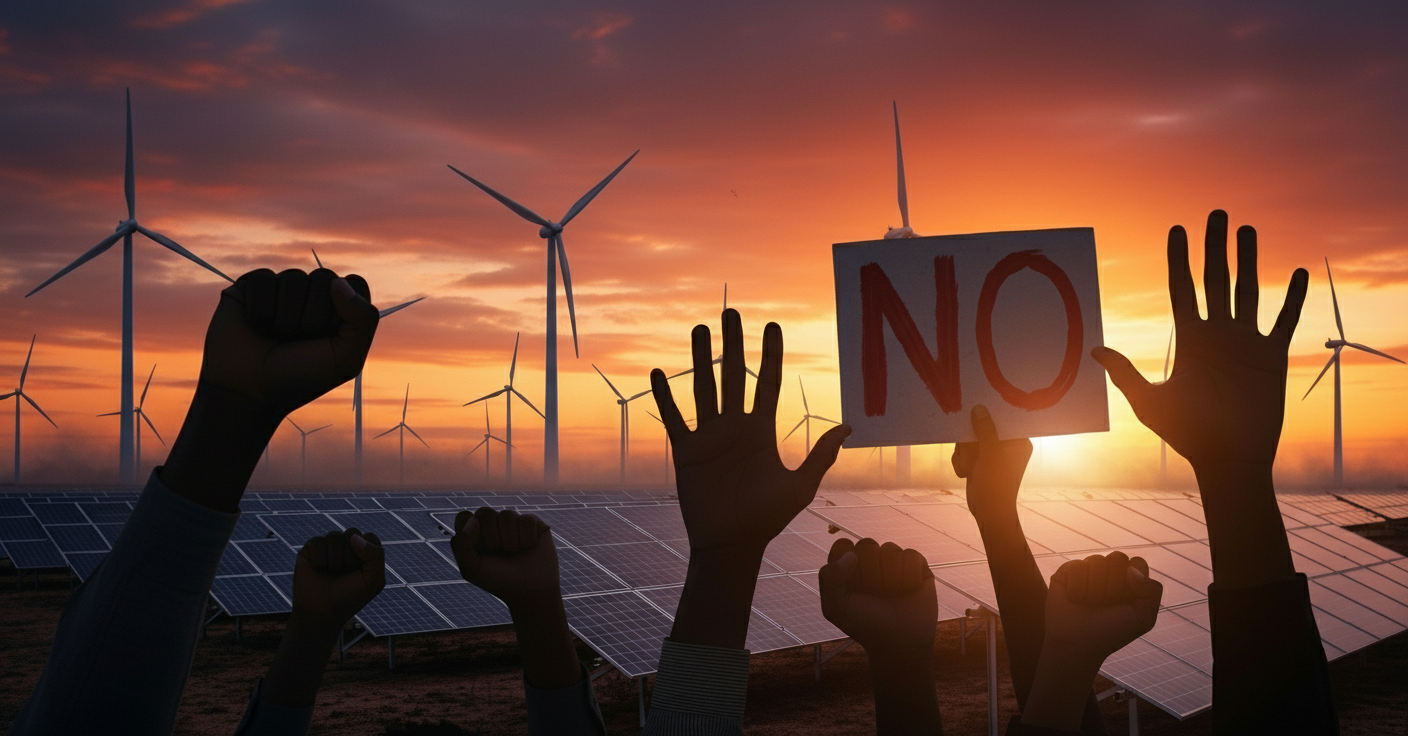
Community resistance to climate interventions has become one of the biggest hidden costs in global sustainability efforts. Project delays from local pushback, including opposition to wind turbine farms, cost developers approximately $7.5 million per project (Inside Climate News, 2024). Multiply that across dozens of canceled or stalled projects worldwide, and the scale of this resistance becomes staggering.
Now shift the lens to West Africa. In Ghana’s Upper East Region, farmers expressed reservations about a UN-backed climate initiative. Instead of cultivating newly built farmland, they adapted the flawed dam project in their own ways. These cases highlight a crucial truth: climate goals can only succeed when they actively engage and respect communities.
Why Community Resistance to Climate Interventions Happens
This resistance isn’t about communities resisting climate goals, as one community leader put it in the first stated case,
“It’s not that we’re against wind or solar or green energy per se, it’s the scale of these projects, the placement of these projects in and amongst our communities, and the preferential treatment on taxes and the destruction of property value.“
Resistance reflects a call for solutions that recognize local knowledge and the everyday realities of the people most affected.
This article explores three key areas. First, we examine why communities resist climate interventions. Second, we assess the costs of unaddressed resistance. Third, we present actionable strategies to build community acceptance.ance.
When communities are not asked
Exclusion is one of the strongest triggers of resistance. Climate programs are too often implemented as pre-packaged solutions, leaving little room for local participation. When affected people aren’t included in decisions about land, water, or infrastructure, mistrust grows.
People feel that decisions are made on them, not with them. Early involvement, open dialogue, and valuing local expertise don’t just build trust they lead to lasting, effective solutions.
How Community Resistance to Climate Interventions Impacts Climate Goals
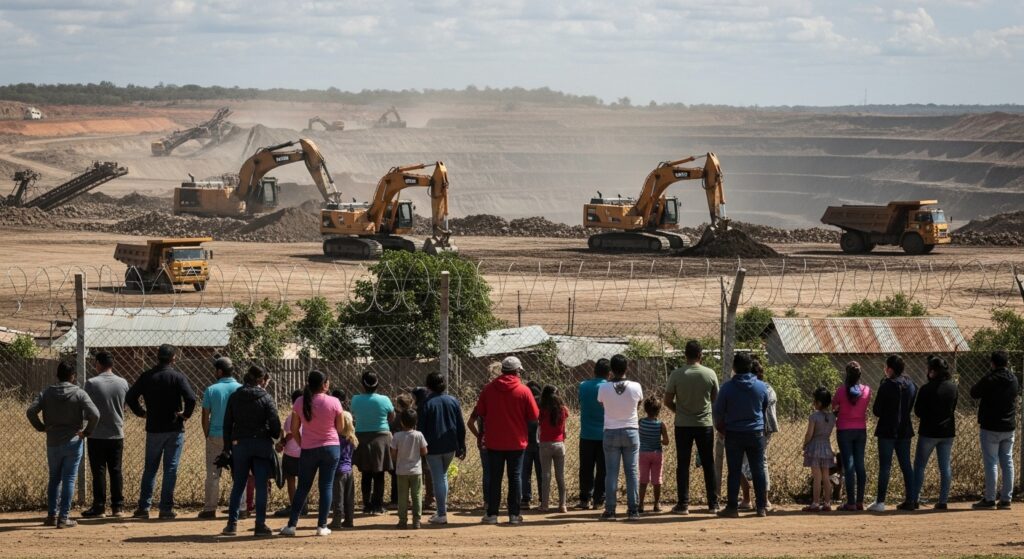
Sometimes, resistance is not about culture or communication; it’s about survival. Consider a fisherman’s dilemma. A proposed offshore wind farm promises climate protection but threatens fish stocks. His family’s food security hangs in the balance. Would you celebrate, or resist? Many would choose the latter, this was the case in France. There was a literature documentation by Enuoh and Bisong (2015). Cross River State residents resisted large-scale forest conservation initiatives. They feared losing access to forest lands and products. Additionally, they worried about forfeiting supplementary income from timber companies and logging concessions. In contexts of economic fragility, well-intentioned schemes that threaten subsistence resources become perceived threats rather than solutions.
Ignoring community’s perception of Climate Change
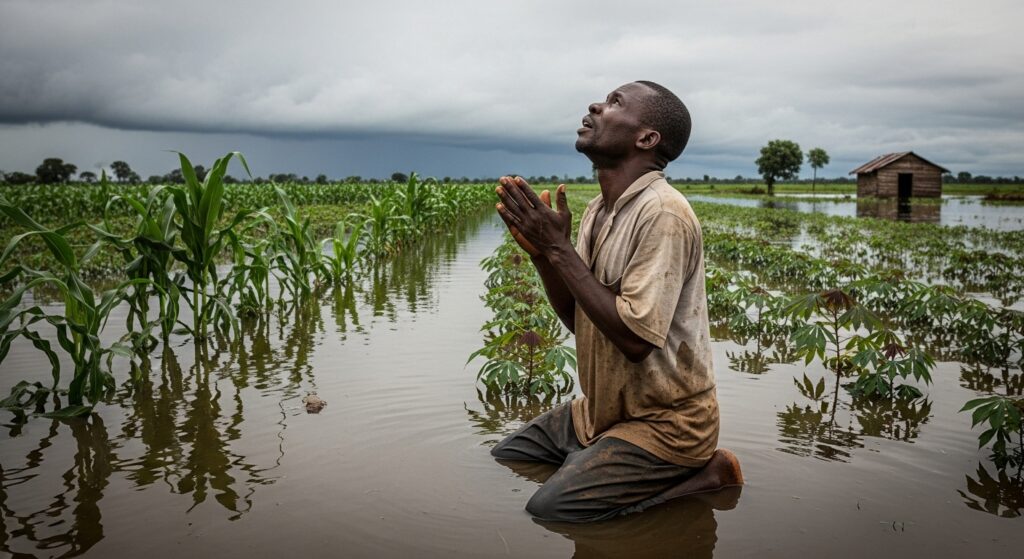
Climate change presents as both technical and religious challenges across different contexts. For northern Nigerian farmers watching fields turn to dust, the phenomenon represents less “climate variability” and more divine testing of faith. To a community that was struck by a flood, it may be seen as ancestral spirits expressing displeasure.
This worldview shapes whether new practices are adopted or ignored. If they believe prayer by itself can break a drought, irrigation equipment or forecasts may be redundant. Science can’t come out on top in all situations in a vacuum. The message has to be conveyed in cultural language, propagated through trusted community leaders, and connected with deeply held beliefs.
The Economics of Survival
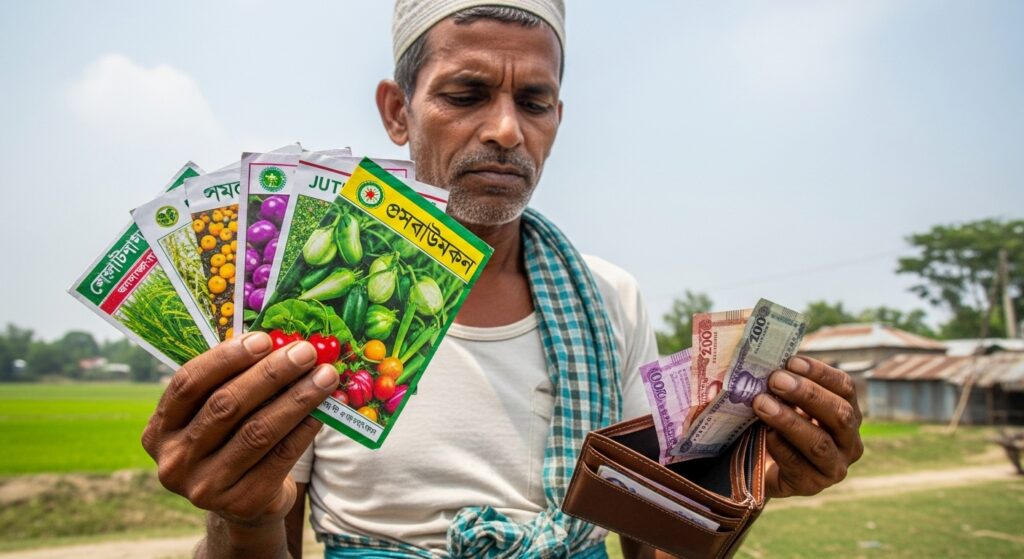
Even when people believe in climate solutions, belief alone doesn’t put food on the table. A farmer may be informed that his production doubles by using a higher-yielding variety of seed, but if the seed costs more than a week’s income, adoption remains a dream, not a reality.
This tension is universal. In Bangladesh, homes were resistant to flood-proof homes not due to disbelief in science, but because they could not afford to rebuild. Affordability in most instances speaks louder than knowledge. If adaptation is not made affordable, humans will be insistent on remaining with coping mechanisms that are short-term and, in most instances, detrimental, like selling off livestock or migrating out of their farming zones.
Strategies for Fostering Acceptance
Community Co-Creation
Overcoming resistance requires a paradigm shift in how climate action is planned and implemented. Rather than a top-down, expert-led process, the evidence shows that effective climate action is people-centered and collectively designed. Engaging people in the design of climate action is critical in creating lasting effect and ensuring transparency and accountability in the process. This also allows us to address and reverse historic inequities, which have left some populations more vulnerable than others to climate impacts. You’ll never find a “one-size-fits-all” with community engagement, yet there are a variety of models that can be implemented in a way that engages a community wherever it is. The simplest level is
- outreach, in which engagement is utilized as a teaching method in order to deliver facts regarding how climate change directly impacts the lives and neighborhoods of city residents.
- consultation, which utilizes tools like polls and surveys in seeking opinion on proposed policies.
- open discussions and co-creation, this means that communities themselves can put forth their own actions and recommendations directly, with new, unheard voices entering into the conversation. The “We Act Environmental Justice” in New York City is an ideal example, by ensuring that low-income, frontline communities of colour are involved in and tracking implementation of climate action plans. This shift in passive to active role gives a sense of ownership and personal efficacy, breaking down the psychological obstacles of powerlessness and creating long-term support for a plan.
Building Trust and Finding Common Ground
Climate resistance is more a function of a trust deficit than an information gap. Information or science reports are less effective in and of themselves if the messenger is viewed as external to the community or is viewed with distrust. So communication is delicate in its crafting, and it needs to be delivered by trustworthy messengers.
To be an effective message, it must resonate with the lived experiences and concerns within the community. This means presenting climate action in local, as opposed to universal, terms, as a job creator, a public health improver, a provider of increased energy security, or a reducer of utility bills. The most effective method is tapping into local trust builders, such as grassroots organizations and community leaders. This approach builds credibility and avoids political and social divisiveness, which would otherwise derail a top-down communication campaign. When relationship-building and dialogue are prioritized over advertising messages, it allows a community to be a resilience partner, rather than being viewed as a project beneficiary.
In sharing our point of view, we hope that this demonstrates that overcoming the climate emergency is less a question of a technological or political nature and more a profound human one. Overcoming resistance entails listening to the concerns of the communities in that specific context, giving thought to characteristic environmental dynamics, and making the transition into a low-carbon world fair, equitable, and community-led.