
Building trust towards informed consent is not just a principle but a lived reality in the field.
During our research in Northern Nigeria, a woman in her late twenties told our team, “I don’t want trouble again.” Just months earlier, she had agreed to an interview, reassured that her identity and information would only be used for the study. She trusted the process, believing no harm could come from talking, yet her words revealed how fragile that trust can be. Nobody mentioned that her voice, even anonymized, would be broadcast on a local radio station. When her husband heard it, he was furious.
In Northern Nigeria, especially in conservative communities, women’s public expression, particularly on sensitive topics like health or family, is often heavily scrutinized. He scolded her so much that she became afraid to participate again.
This time, she was hesitant. Her words were careful, shaped by more than caution. She was afraid. She also needed to protect her reputation in the community.
This incident revealed a deeper issue: the true meaning of informed consent in research, and how researchers handle confidential data across diverse West African communities.
The Principles Behind Informed Consent
Informed consent is a fundamental concept in research ethics. It is based on these three fundamental principles:
-
- Clarity: Researchers must give clear explanations in a language and format that describe the study’s objectives, procedures, risks, benefits, and the right to withdraw at any time.
-
- Voluntariness: Participants must give consent voluntarily, without coercion.
-
- Comprehension: Participants must genuinely understand the information before they agree to take part.
These are not boxes to tick. They are about justice, respect, and protecting people from harm. While the principles are widely accepted, applying them effectively requires adaptation to local realities, cultural, linguistic, and social, which vary across West Africa.
Where Informed Consent Gets Complicated
Obtaining meaningful informed consent in West African health research is often difficult. Several interrelated factors make the process more complex:
-
- Low Literacy Rates and Linguistic Diversity: West Africa is home to hundreds of languages and dialects. For example, UNESCO (2023) notes that Nigeria alone has more than 500 spoken languages. Only 59.6% of women and 74.4% of men in the region are literate. In remote areas, many participants cannot access written consent documents in official languages like English or French.
-
- Cultural Standards for Making Decisions: In many societies, decisions are made collectively, not individually. Women and younger adults may defer to spouses, fathers, or elders in patriarchal or gerontocratic contexts. This dynamic challenges Western ideas of individual consent.
-
- Historical Exploitation and Mistrust: Legacies of exploitative “parachute research” fuel skepticism. A 2020 study in Ghana found that many community members linked research with government propaganda or external surveillance. This made them reluctant to participate.
-
- Inequalities in Power Between Participants and Researchers: Acquiescence bias may result from participants viewing researchers, especially those connected to foreign organizations, as authoritative personalities. Participants may give consent as a result of this, even when they don’t truly understand or agree with it.
A Better Way: Toward Meaningful, Culturally Sensitive Consent
Researchers must use culturally relevant consent processes that consider local conditions in order to overcome the complications highlighted.
-
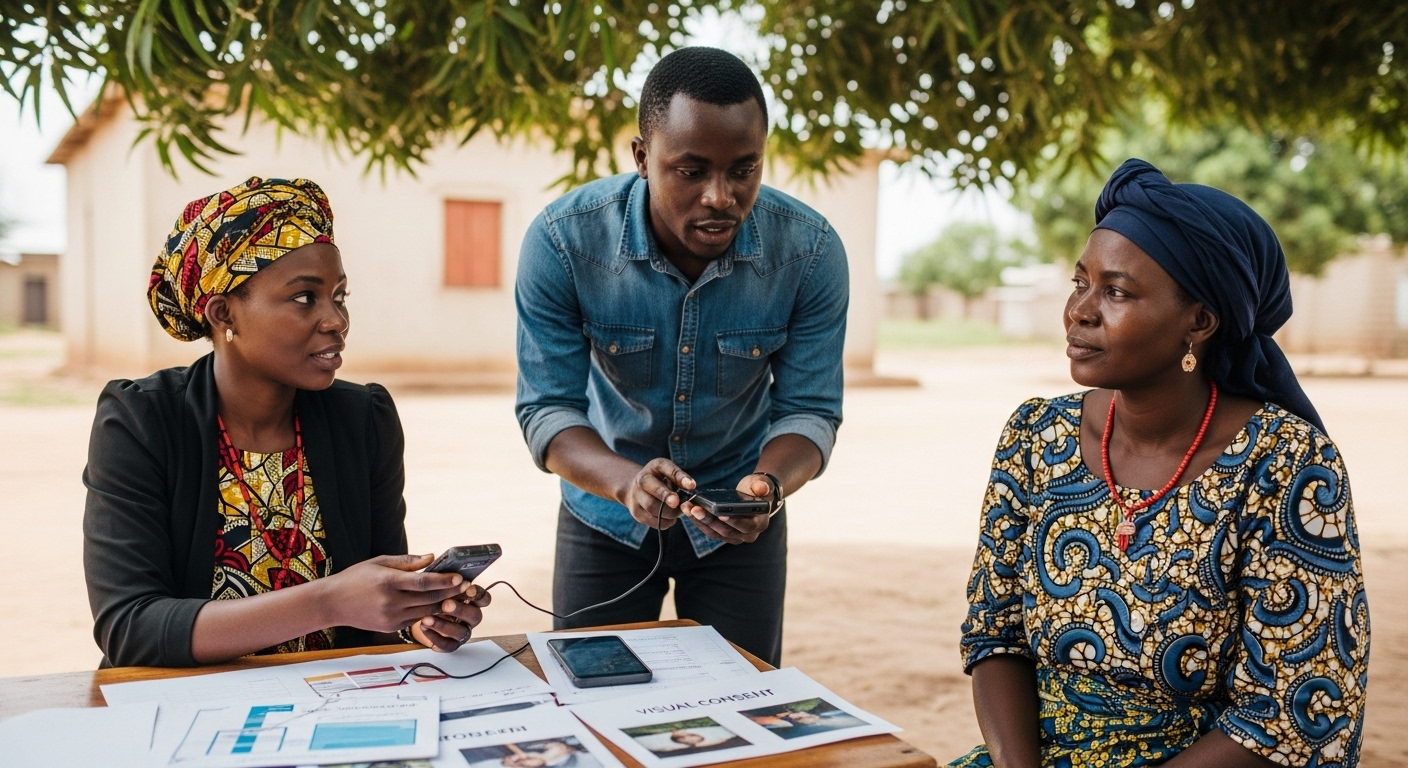
- Oral Consent Use in Regional Languages: Researchers should translate consent materials into participants’ preferred languages. Using community interpreters or audio recordings for oral consent procedures becomes relevant when literacy is a problem in order to ensure that participants comprehend the purpose of the study.
-
- Visual and Multimedia Tools: Utilize infographics, visual aids, and interactive storytelling to explain difficult concepts. In rural Senegal and Sierra Leone, these have been particularly successful in reaching low-literate communities (PATH, 2020).
When available, mobile technology platforms can be used to send interactive, language-appropriate consent information through videos or SMS.
- Visual and Multimedia Tools: Utilize infographics, visual aids, and interactive storytelling to explain difficult concepts. In rural Senegal and Sierra Leone, these have been particularly successful in reaching low-literate communities (PATH, 2020).
-
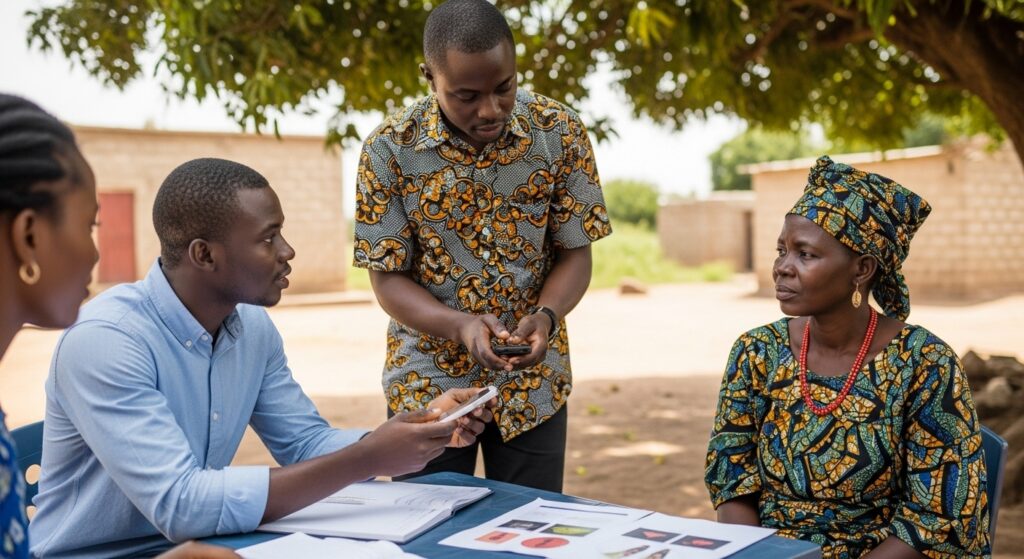
- Community Liaisons and Cultural Brokers: Collaborate with community-respected and trusted health professionals, religious leaders, and local leaders.
For instance, at Ghana’s Navrongo Health Research Centre, skilled community-based fieldworkers from the same ethnic groups are involved throughout consent process. This increased confidence and understanding (Tindana et al., Developing World Bioethics, 2007).
- Community Liaisons and Cultural Brokers: Collaborate with community-respected and trusted health professionals, religious leaders, and local leaders.
-
- Consent as a Process, Not a One-Time Event: Throughout the course of the research, review and confirm consent. Ensure to promote an open discussion in which people can ask questions or terminate conversations without worrying about the consequences.
-
- Ethics Committee Guidance: Collaborate with regional ethical committees or IRBs to create consent processes that satisfy community expectations as well as international requirements. Before approving consent protocols, several IRBs in Senegal and Nigeria now demand proof of their linguistic and cultural suitability.
Conclusion
The Northern Nigerian woman didn’t decline to take part because she didn’t care about lending her voice, but her prior experience had taught her that consenting may have unforeseen repercussions.
Her experience serves as a reminder that consent is about empathy as much as ethics. The true goal is to see people not as research subjects, but as human beings, each with histories, relationships, and responsibilities that shape their lives and choices.