

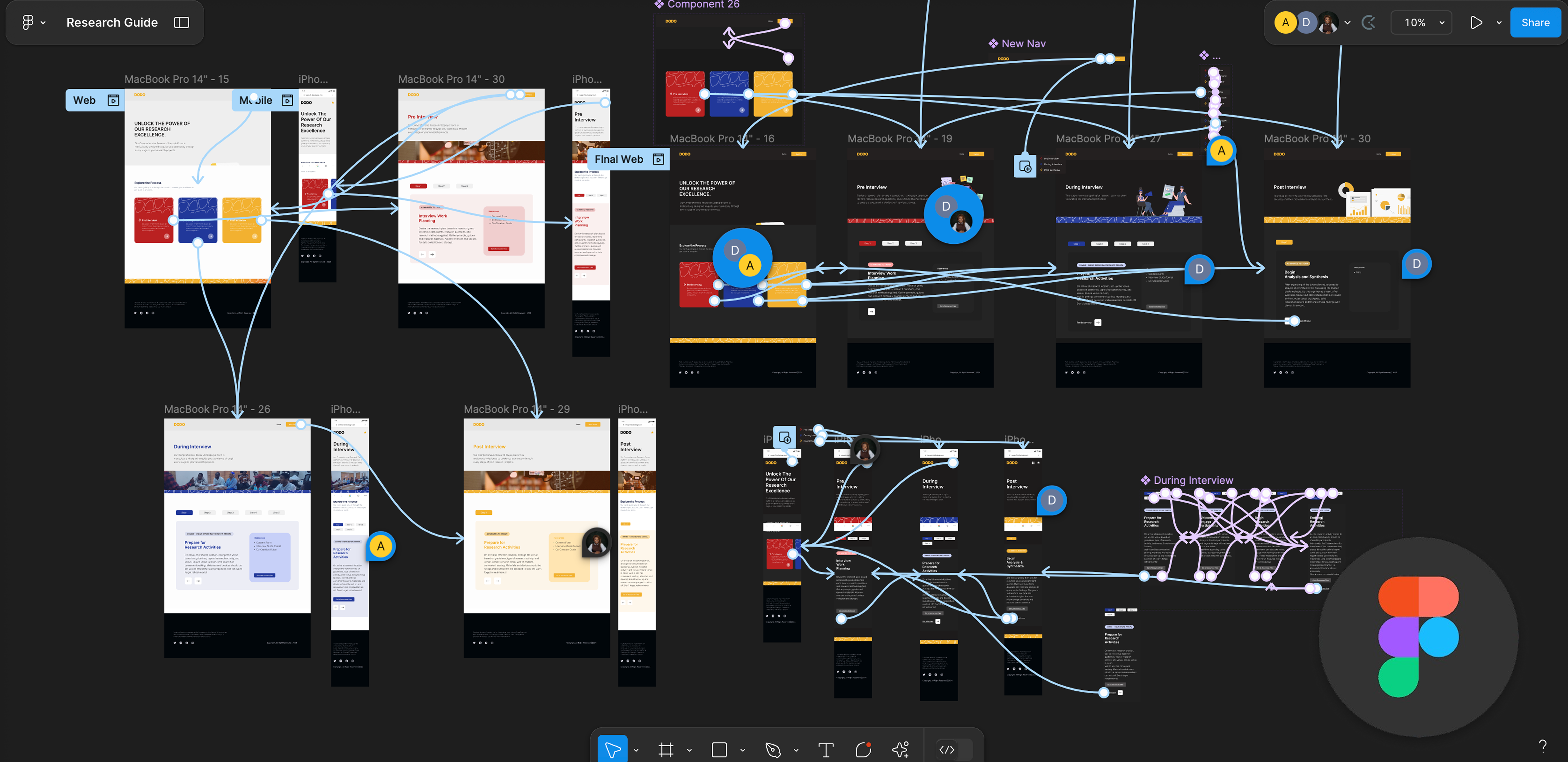
Every design researcher has a unique approach to problem-solving, but the right design and research tools make all the difference. The art of finding and leveraging specific tools and methods that enhance one’s creativity, collaboration, and efficiency is key. Whether it is transforming ideas into final design outcomes, facilitating seamless teamwork, or uncovering deep user insights, the right tools and techniques makes all the difference.
Here’s a glimpse into how different members of our team use design and research tools to bring ideas to life.
Debb
Debb relies on Figma for turning ideas into reality—here’s how it streamlines our design process.
Figma is my go-to tool for transforming concepts into refined designs with ease. Its real-time collaboration features allow me to work seamlessly with the team, ensuring feedback and iteration happen effortlessly.
Figma’s ability to keep everything structured and accessible, ensuring our team is able to move efficiently from concept to execution is superb. Its cloud-based nature also means no version control headaches—everyone stays on the same page, all the time. As someone who thrives on collaboration, Figma is my go-to tool.

Omowumi
Miro is an exciting and fascinating tool for me simply because it enables me to run remote workshops with team members. I am located in a different part of the country away from our head office and many team members, this means I am majorly remote. Miro’s capability enables real-time collaboration, allowing us work as one- each team member is able to, within seconds, create quick sketches to communicate their ideas, and get feedback in record time. This collaborative approach often guides our decisions more effectively as we work and helps guides us quickly as we journey towards innovative solutions.
Miro’s templates are a plus, helping us organize complex information into clear frameworks quickly. Whether analyzing or affinity mapping, visualizing everything in one place simplifies discussions and decision-making.

Mujeedah
My favorite research method is conducting user interviews. It allows me to get deep insight into the users’ world and understand their pain points, motivations, and behavior. I use user interviews to identify very detailed and specific problems users face and then iterate on solutions to address those issues.
For example, while working on improving parents’ habit of saving for their children’s education, interviews revealed that the major setback to saving and investing is the lack of information on trusted investments.
This led us to come up with a solution that gives accessible financial educational resources. It emphasizes transparency in investment and saving options such as mutual funds, corporate bonds, and high-yield savings accounts. By fostering trust through sharing of reliable information, parents were empowered to make more confident decisions when saving for their children’s education.

Melvina
Affinity mapping is one of my favorite research methods, especially in collaborative work sessions. It really comes in handy when dealing with data from user interviews, which can be overwhelming at times due to the vast amount of the data. With this method, data can be organized into clusters to easily identify key user needs, pain points, opportunities, patterns, and insights that may have otherwise been hidden.
This method effectively transforms raw, complex data into structured and actionable insights and could be used at any stage of the research process, from idea prioritization to strategy development, enabling informed decision-making and aligning teams around key opportunity areas.