

“Mel, give your feedback…”
In my first few weeks at DODO, this phrase echoed through nearly every work session. I often paused, unsure where to begin. It’s easy to notice what’s not working, to see the gaps in a design question, methodology, or prototype, but I wanted to give feedback that actually drove improvement, not just pointed out issues. I wanted to contribute in a way that pushed our designs forward, sparking creativity and leading to actionable solutions.

At first, I gave feedback unfiltered, saying whatever came to mind. But I soon noticed it left my teammates unsure of the next steps. Fortunately, Susan, my boss, introduced the Sandwich Critique Method, a framework that starts with positives, moves to areas of improvement, and ends with encouragement. It made feedback more structured and thoughtful. Yet one question lingered: What happens after the feedback session? How could we ensure that the valuable insights from each session weren’t lost but rather became steps toward improvement and innovation?
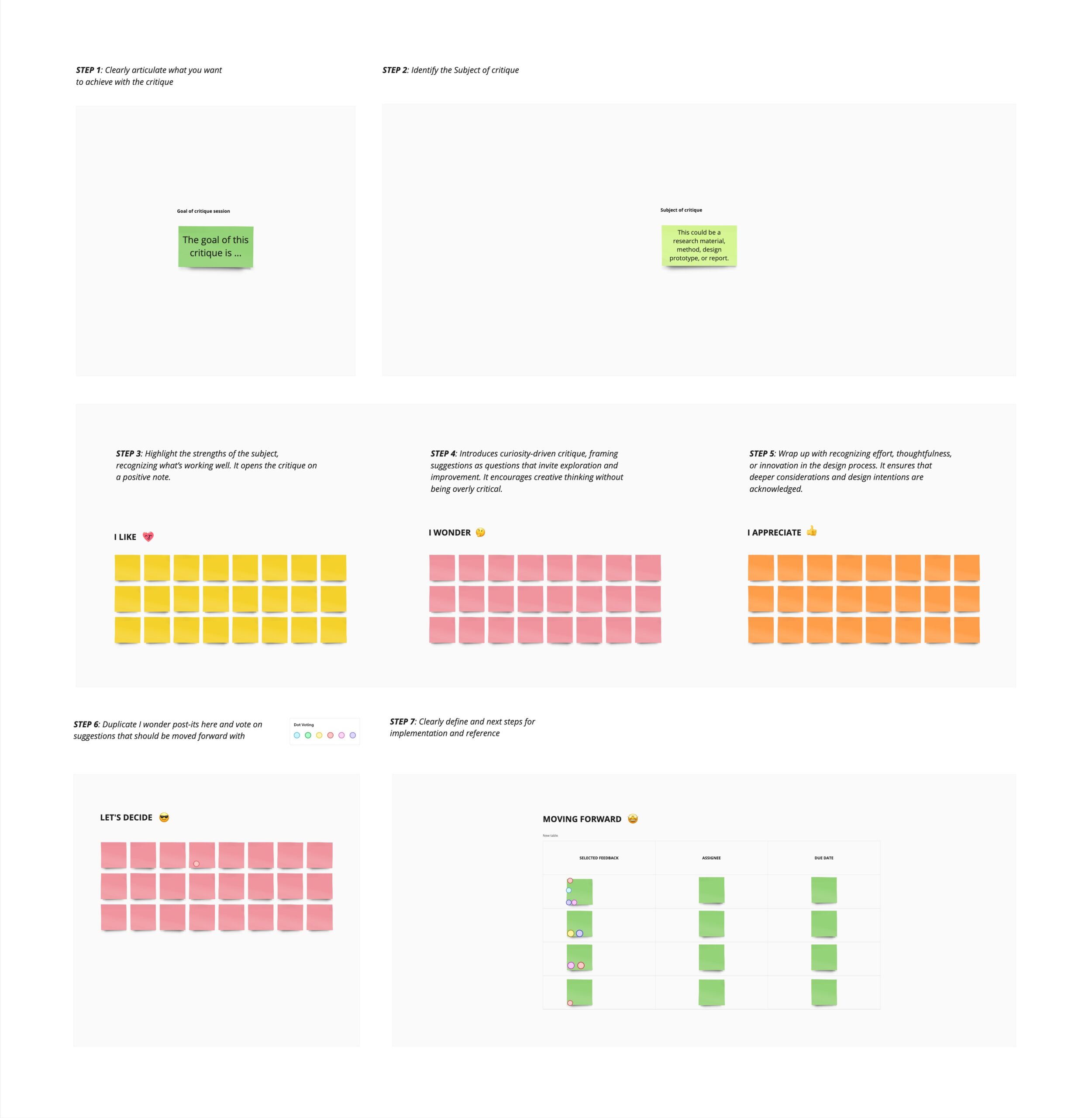
That’s what inspired me to create the I-LIKE, I-WONDER, I-APPRECIATE design critique tool. It’s a structured, reflective approach that transforms feedback into a springboard for improvement and innovation.
Why the Right Feedback Structure Matters
In the design world, feedback isn’t just a step in the process. It’s a driving force that fuels innovation, improvement, and user-centered design. But the problem many of us encounter is that while feedback is vital, it often falls short of its purpose. Studies show that more than half of feedback given in professional settings isn’t effectively acted upon, often because it lacks structure, clarity, or the constructive framing needed to inspire change.
This is where methods like the Sandwich Critique Method come into play. Originating from Management Consultant Mary Kay Ash, the sandwich model is simple but powerful: it opens with positive feedback, places constructive critique in the middle, and closes with another dose of encouragement. It’s a structure that softens critique, making it more palatable and actionable.
As a UX designer and strategist, I’ve worked within and observed the limitations of standard feedback models. They sometimes lack the depth or curiosity necessary for true collaboration in design. To address this, I’ve developed a critiquing tool that builds on the sandwich principle while adding a forward-thinking, exploratory lens for action afterward. This framework fosters feedback that is not only actionable but also promotes creativity, teamwork, and continuous improvement.

Design Critique Tool. © 2024. Melvina Okechukwu | DODO Design Africa
Who Can Use This Tool?
This critique tool is designed to be versatile, and applicable to various professional contexts where structured feedback is essential. Here’s how it can serve different teams:
- Design Teams: Elevate product design through meaningful critique that nurtures creativity and innovation.
- UX Researchers: Frame research findings in ways that are insightful, actionable, and motivating for the team.
- Product Teams: Create an environment where feedback leads to practical improvements and strategic enhancements.
- Cross-Functional Teams: Bring a structured, constructive approach to feedback that ensures all voices are heard and valued.
Create a space where ideas evolve naturally, collaboration thrives, and every critique becomes an opportunity to build something better together using this critique tool.